Every generation gets its own unique species of boogeymen.
In the ‘80s Hollywood gave us maniacal masked mass murderers (say that five times fast), various species of malevolent puppets trying to eat us, and adaptations of Stephen King’s shopping lists written on loose leaf paper and sold for six figures to Dino de Laurentiis. Earlier generations had Gothic monsters living in dusty, cobwebbed castles Somewhere In Europe; the ‘90s saw the rise of serial killer chic and self-aware slashers, along with the midlife crises of various ‘80s superstars, who either got drastic origin makeovers or took off for outer space; the early 21st century gave us torture porn, J-Horror, slickly filmed remakes and jittery found footage.
Recently movie theaters have seen the rise of a style that nobody seems to know what to call. Post-horror, arthouse horror, elevated horror are all names which have been floated for consideration. I think in a few decades scholars will look back and associate 2020s horror with one studio, A24, in the way that earlier horror decades are all tied to Universal or Hammer, regardless of their actual pedigree. Leviticus was distributed stateside by Neon but definitely feels like an “A24 horror” movie.
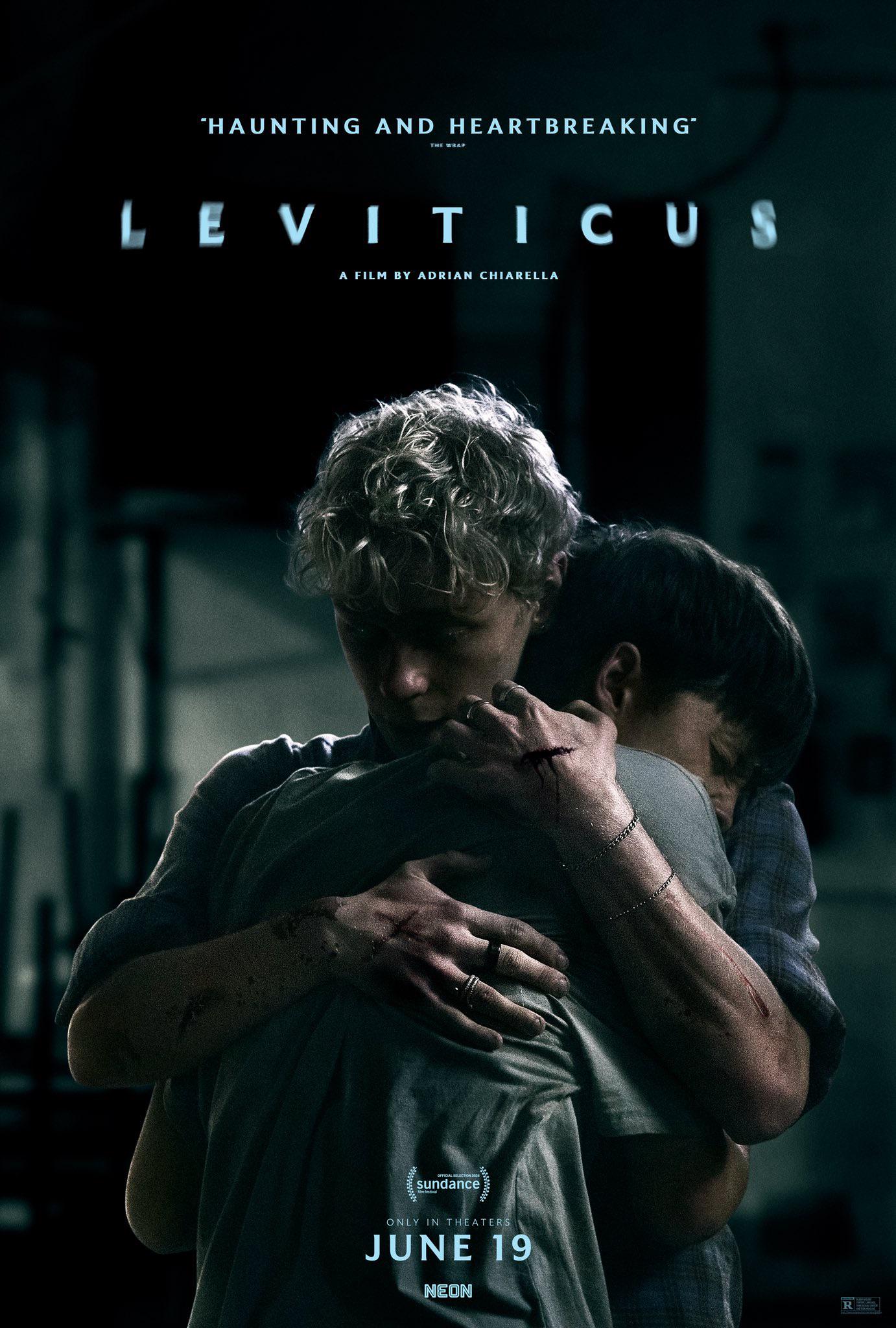
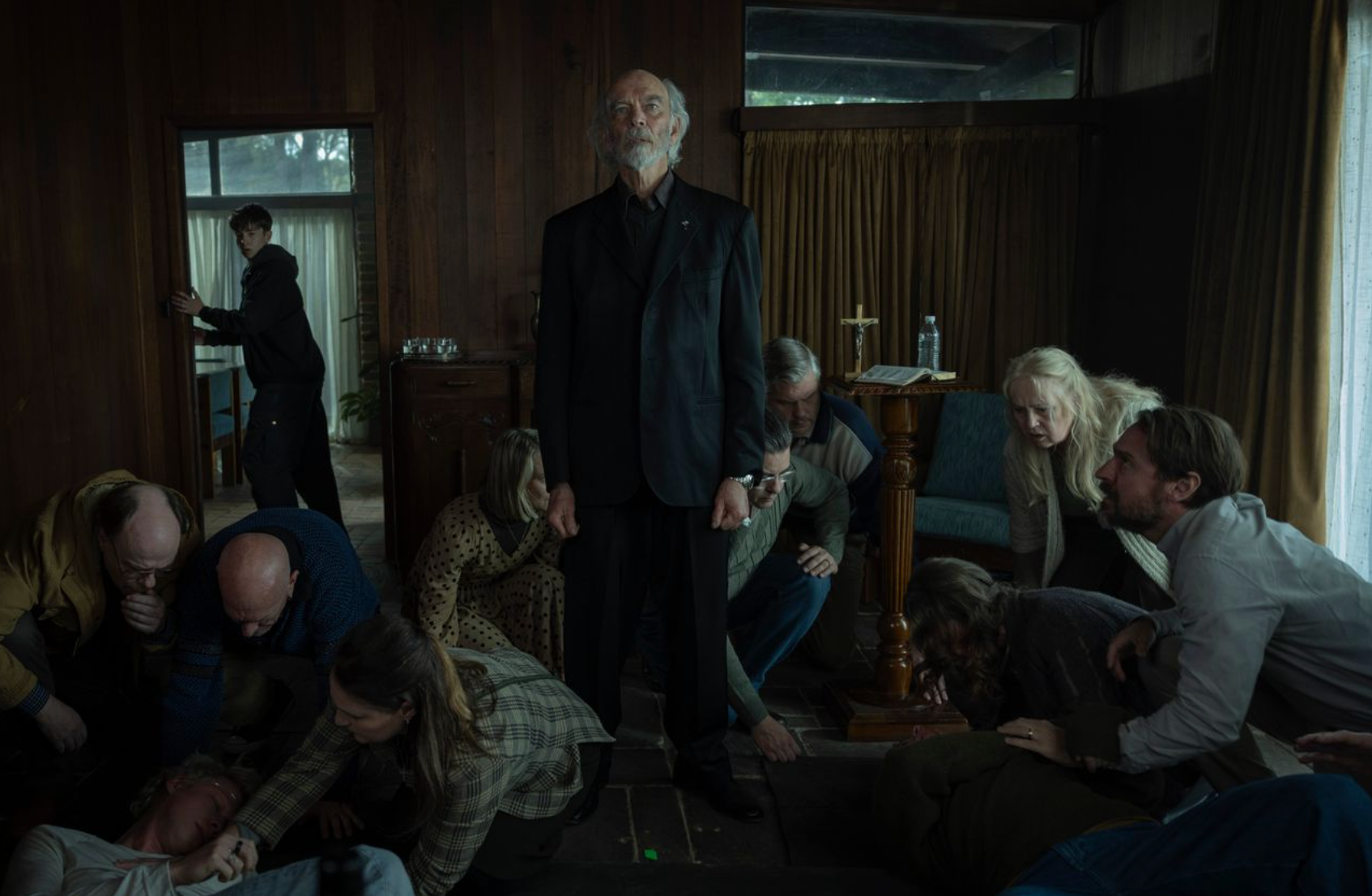
Naim and Ryan (Joe Bird, Stacy Clausen) are two gay teens growing up in a strict religious community in the Australian countryside who have to keep their affections a secret from, well, more or less the whole town. When a third boy, Hunter, enters the picture, Naim outs them both to Hunter’s father, who happens to be the local pastor. This earns both boys a visit from an ominous, unnamed character referred to as “the Deliverance Healer.” After enduring a nausea-inducing laying of hands, Ryan and Hunter begin acting strangely, both of them seeming to interact with an invisible entity which is both seductive and violent. After Naim’s indoctrinated mom sells him out and forces him to undergo the same ritual, he sees what the other two have been dealing with.
The being tormenting the boys, and others as we find out, is a prime example of what I call the Spontaneous Monster. I don’t mean that it’s flighty and doesn’t like to make definite plans, but rather, it has no mythological or scientific origin or explanation for its existence, it seems to have literally appeared out of nowhere. A24-ish horror is replete with these and many of them don’t even have proper names: the Smile Entity, the It Follows Entity, the Whatever Was Doing Stuff in Skinamarink Entity. Some of them are vaguely labeled “urban legends” (looking at you, Bye Bye Man) but even that’s not really a backstory, just a brand. The Leviticus Entity, so I shall dub it, is summoned by the community elders whenever a boy or girl in this community gets caught being gay, and it takes the form of whoever you’re most attracted to in order to approach you and (in the words of Overlook caretaker Delbert Grady) “correct” you.
Like most of these movies, the heroes track someone down, a former victim, who establishes the rules governing the Spontaneous Monster for the audience. And like most of these movies, the rest of the running time is more or less just fleeing from the monster and trying to find a way to destroy it. The movie’s second half is a little bit thin in terms of setting up the showdown, but both Bird and Clausen give it their all and the movie even manages to end on an inspiring note. Leviticus gives us scene after scene of betrayal – boys cheating on their boyfriends, teens ratting each other out, parents surrendering their children for indoctrination, even a religion intended to comfort treating young love as a sin – and makes the case, quite compellingly, that we can survive those betrayals without being destroyed by them.